This is the Fendi Bag Andy Sachs Would Wear to Work Today
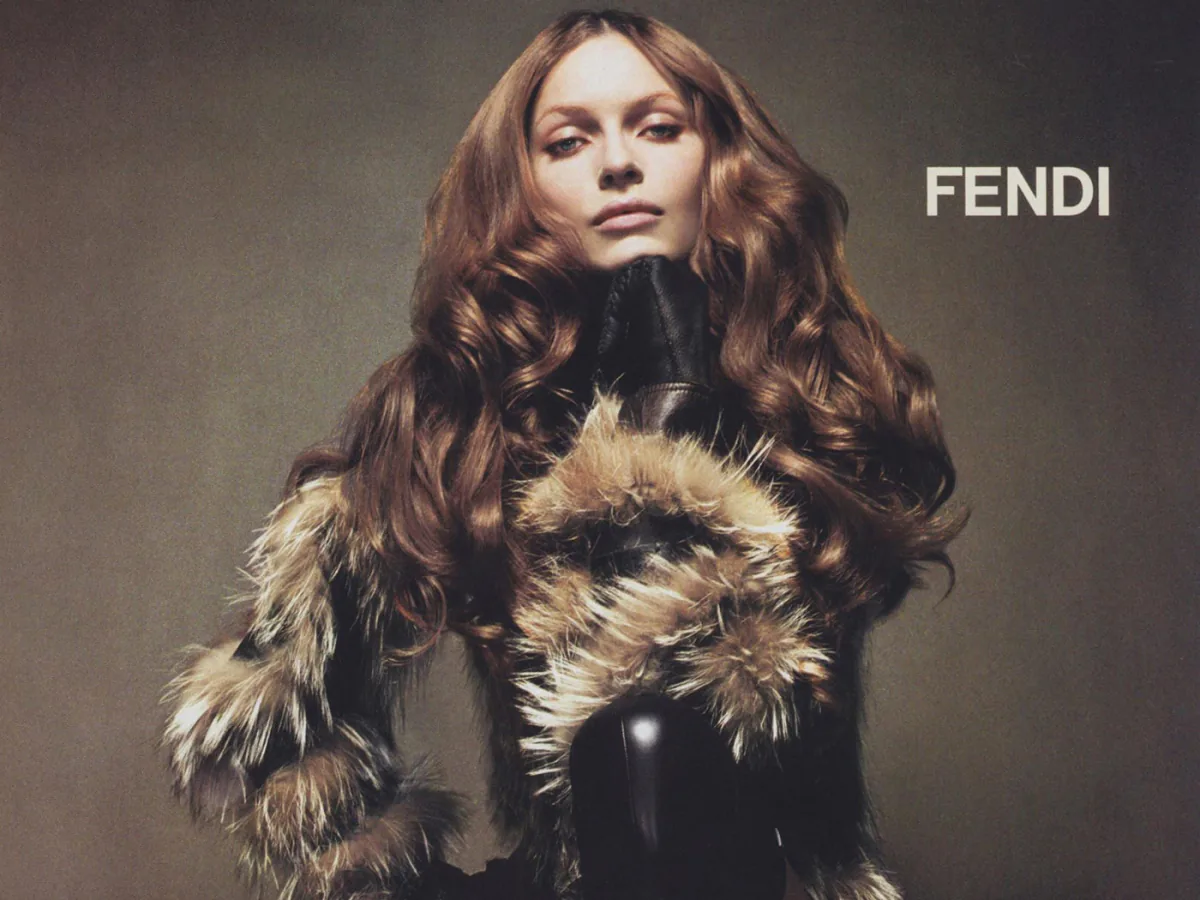
Looking back at the trainwreck that was 2002, I firmly do believe, dear reader, that this was the year we had peaked as a culture.
Lauren Weisberger, the anonymous assistant fired after exactly 10 months at Vogue, had only recently enrolled herself in The Writer’s Voice, the nighttime creative writing class that birthed the job a million girls would kill for.
It was the year Justin Timberlake broke up with Britney over a two-word text while she was on a 20-hour shoot for the Overprotected (Darkchild Remix) MV (heck, even Berger’s breakup to Carrie via Post-it note was seven words!) Meanwhile, the dark child of the industry, Christina Aguilera, stripped down to her new Xtina persona for the Dirrty era. And among the more scholastic circles, yours truly, aspirant of style even at the seasoned age of two, had proclaimed the plastic porta potty in pastel seafoam the accessory du jour.
During fashion month, the American press — led by Anna Wintour — was embroiled in a bid to slash expenses (“the cost of looking after one person,” reported the March 9th issue of the French daily Le Monde, “was said to be $5,000 for The New York Times Magazine”) following the somber mood of the September 2001 season. This, in turn, prompted major designers to display their wares ahead of scheduled dates (an arrangement Suzy Menkes, writing to then-president of Fédération de la Haute Couture et de la Mode, Didier Grumbach, deemed “unacceptable”), while Italy itself was rife with protesters demonstrating against then-prime minister Silvio Berlusconi.
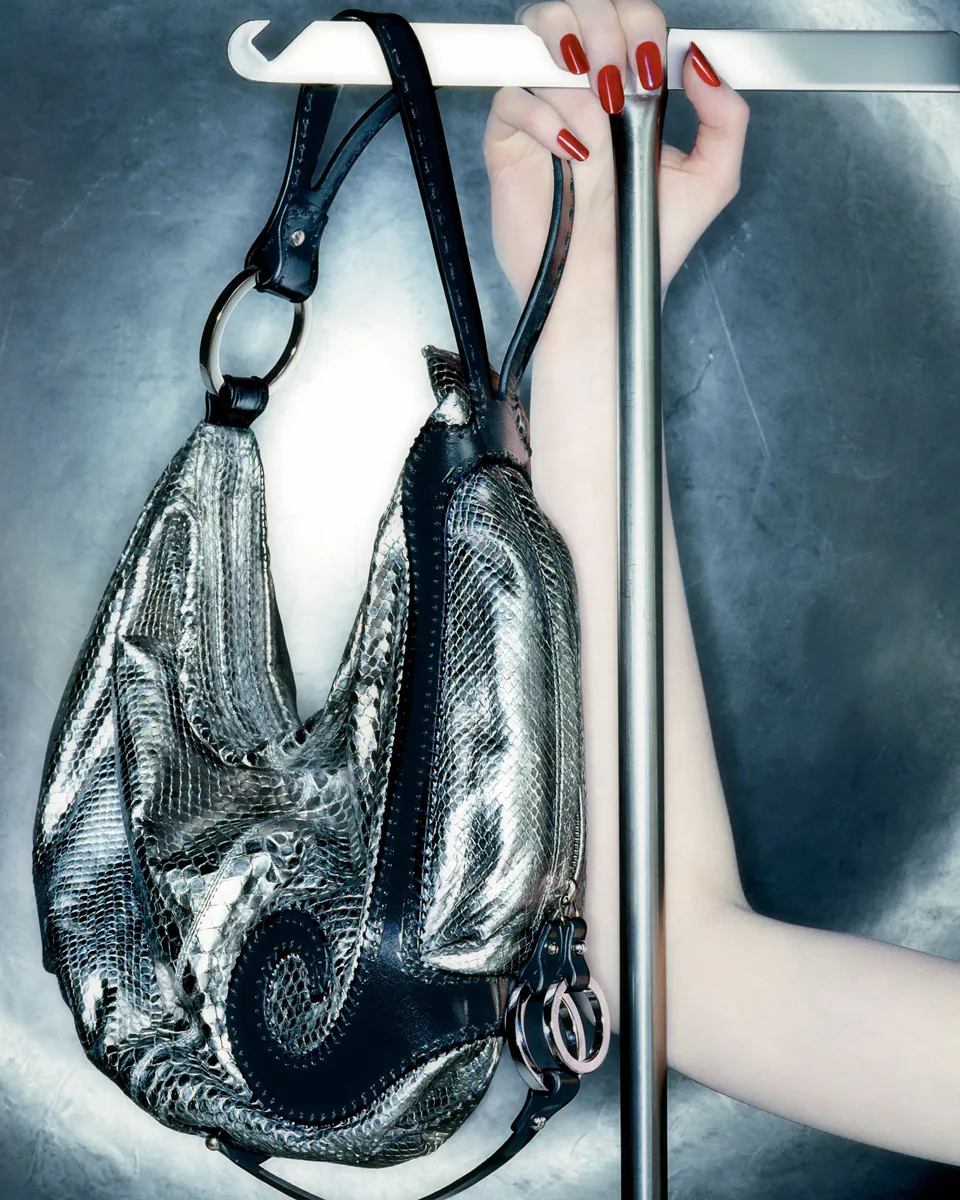
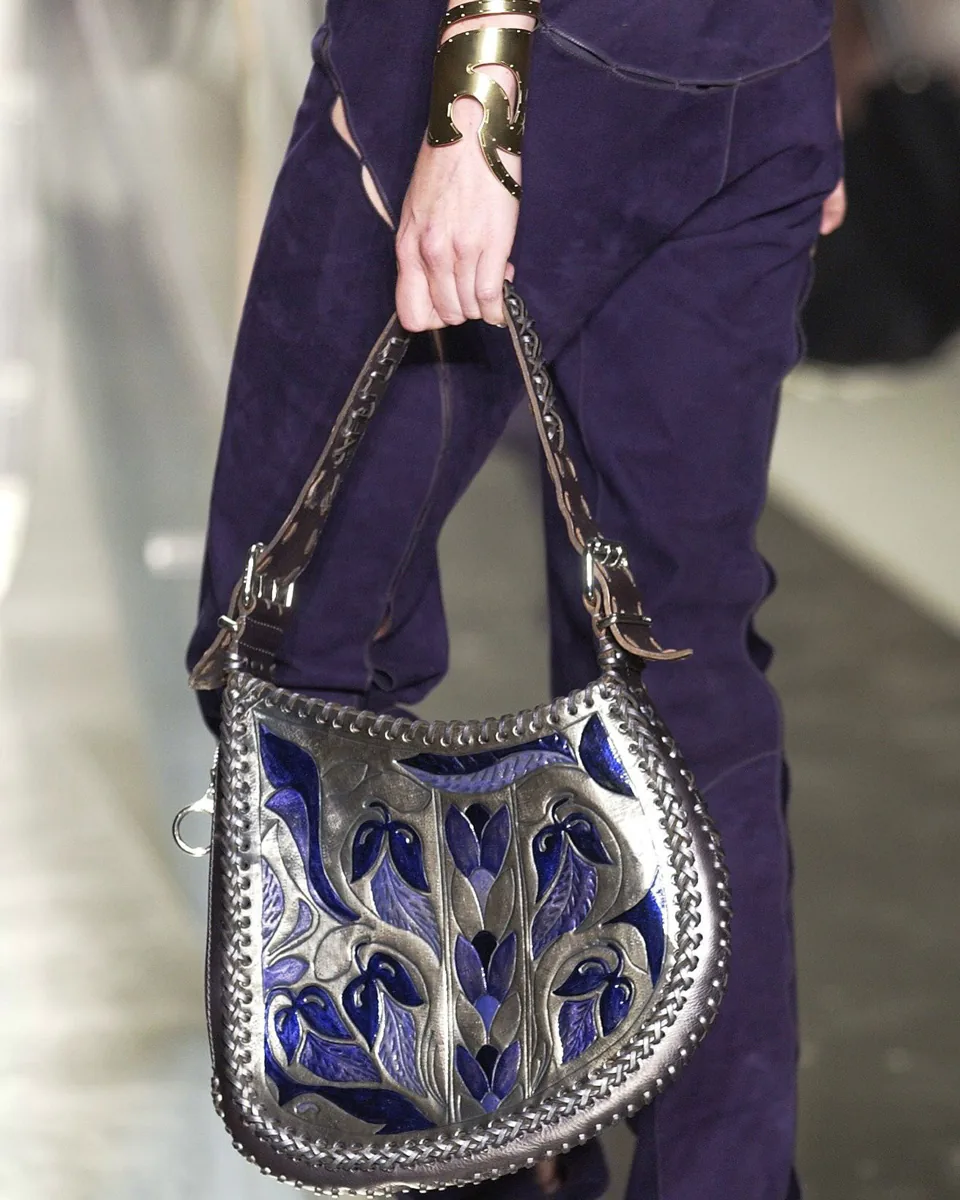
And thus, on the appropriately pared-back backdrop of the Fendi HQ on Via Della Spiga at the ungodly hour of 2.00 pm, models ventured out on the runway in Silvia Venturini Fendi’s vision for Fall 2002, brandishing a bag unlike anything anybody had ever seen before: burnished in brass, sheathed in suede, medieval in its make and entirely authentic in its Y2K excess.
A literal piece of armor for an unstable new millennium. “Call it barbarian deluxe,” wrote Vogue. Fendi, however, called it the Oyster.
Babysitter Blues
Now, there’s no denying that despite the rose-tinted nearsightedness that only comes with hindsight, 2002 was, by all accounts, somewhat of a plumbing disaster (and things have only gone downhill ever since).
But to add to the horrors of parenting toddlers in 2002 (with their penchant for pint-sized facilities), Vogue’s Jenny Comita reported in January that year of the babysitter gone rogue: “Our favorite babysitter made a mockery of your 9:00 PM bedtime,” she swoons, “And she found canvas school-bags to be completely unoriginal. Instead, she slipped her shoulder through the strap of a big, slouchy carryall, inevitably overflowing with gum wrappers, clove cigarettes (don’t tell your mother), and tubes of strawberry lipbalm.”
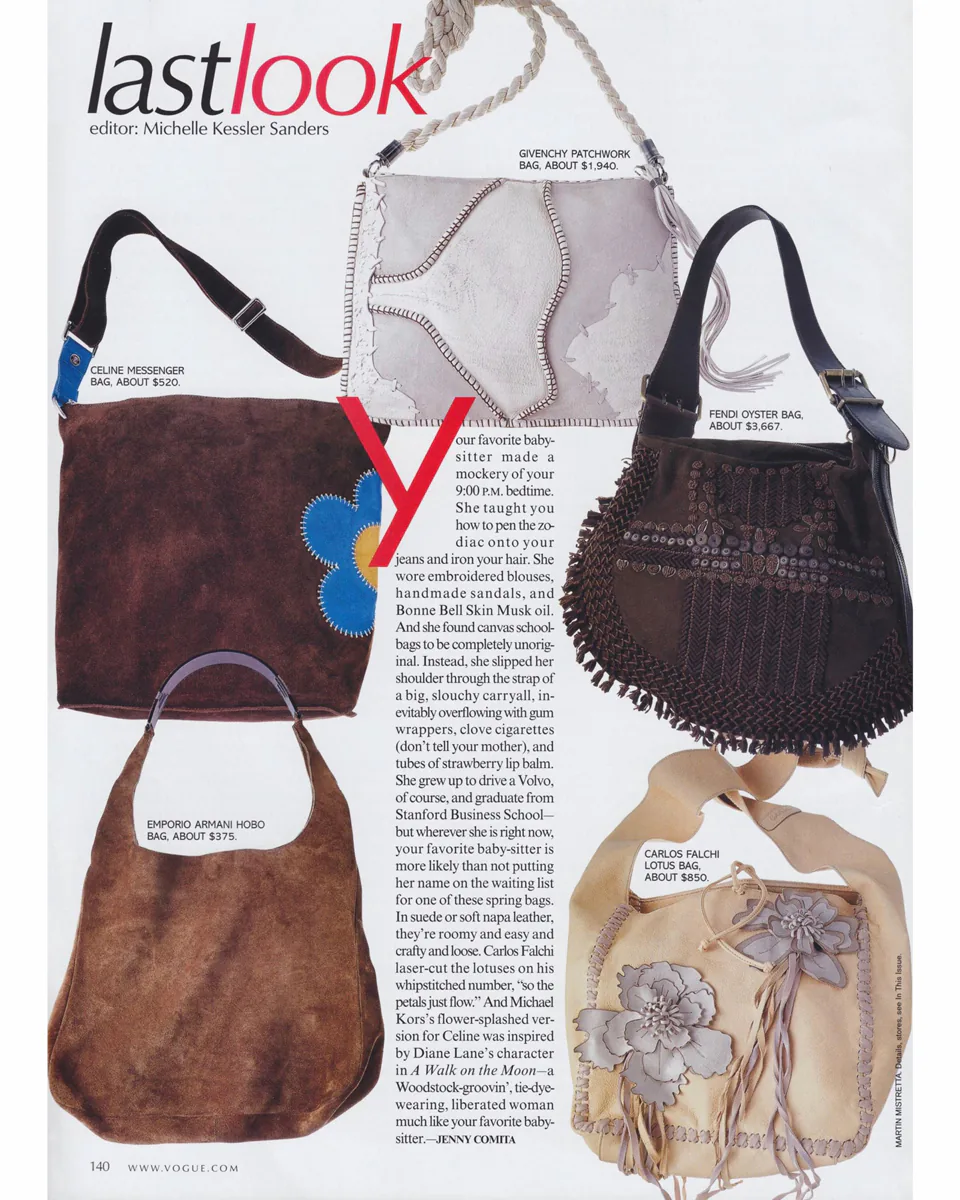
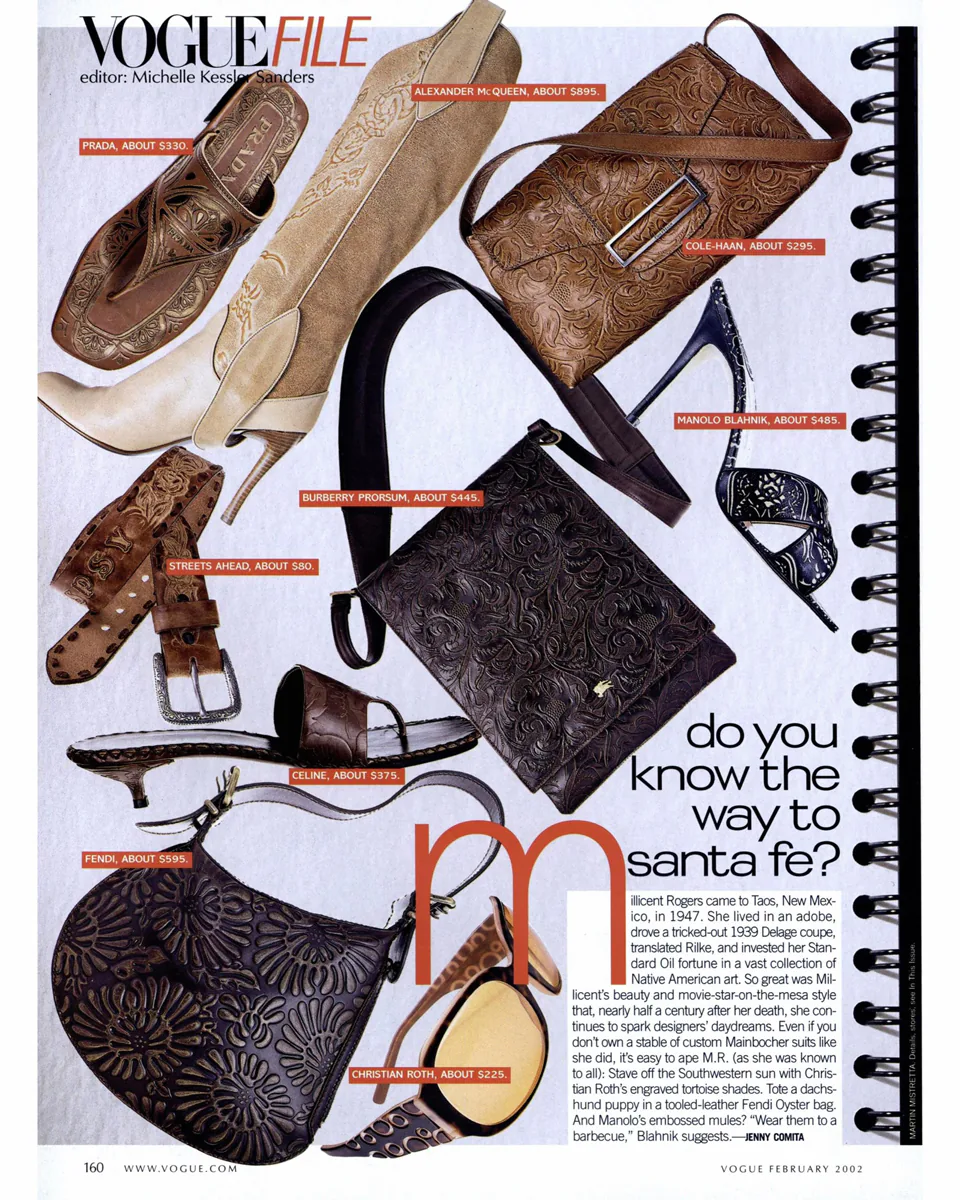
Featured in the article is a montage of the trending “rich hippy” suede sacks of the season: a floral embroidered Michael Kors-era Celine messenger bag, a floral appliquéd Carlos Falchi Lotus bag, a patchworked Givenchy bag, and of course, the showstopping Fendi Oyster bag, beaded, fringed, and fabulous.
In fact, Michelle Kessler-Sanders, then Vogue’s Accessories Director, placed the Oyster in its pages no less than four times that year in four entirely different renditions. “Those guys had no off button at Fendi,” Kessler chimed.
Yet, a Vogue placement (or four) does not a bag make.
Purses Up, Pants Down
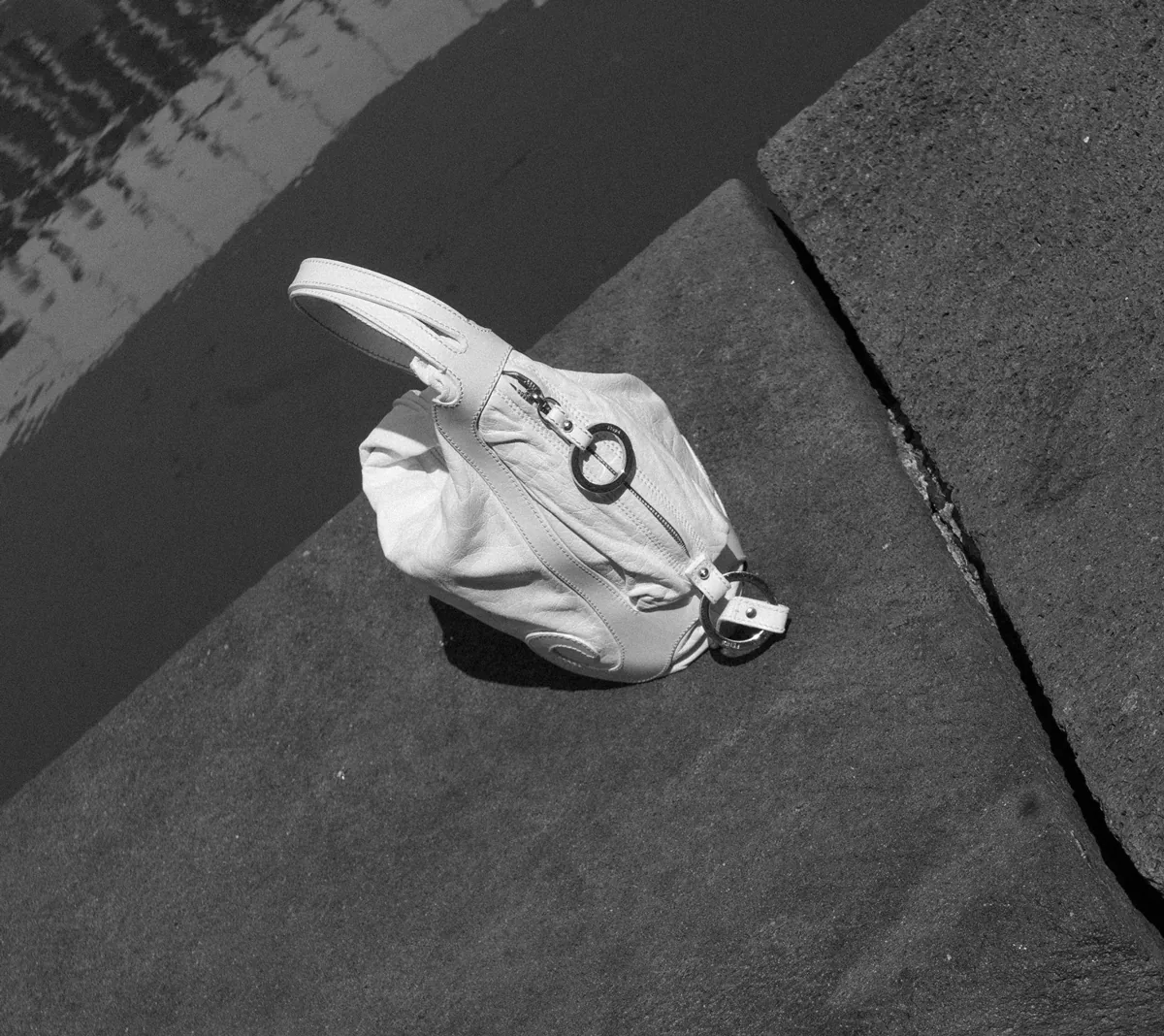
In fact, the Oyster’s endless oeuvre – from the $595 tooled leather version (to “tote a dachshund puppy,” Comita suggests), to goat leather and carved horn, lizard, sycamore, metal, shagreen, and our babysitter-favorite suede (that retailed for $3,667, “or, perhaps, the equivalent of a decent New York City one-bedroom rental,” writes Liana Satenstein) – was a daring proposition in itself. It was even rendered in wood; Kessler-Sanders wrote, “The audacity to stitch wood onto an animal print base. Insanely fabulous!”
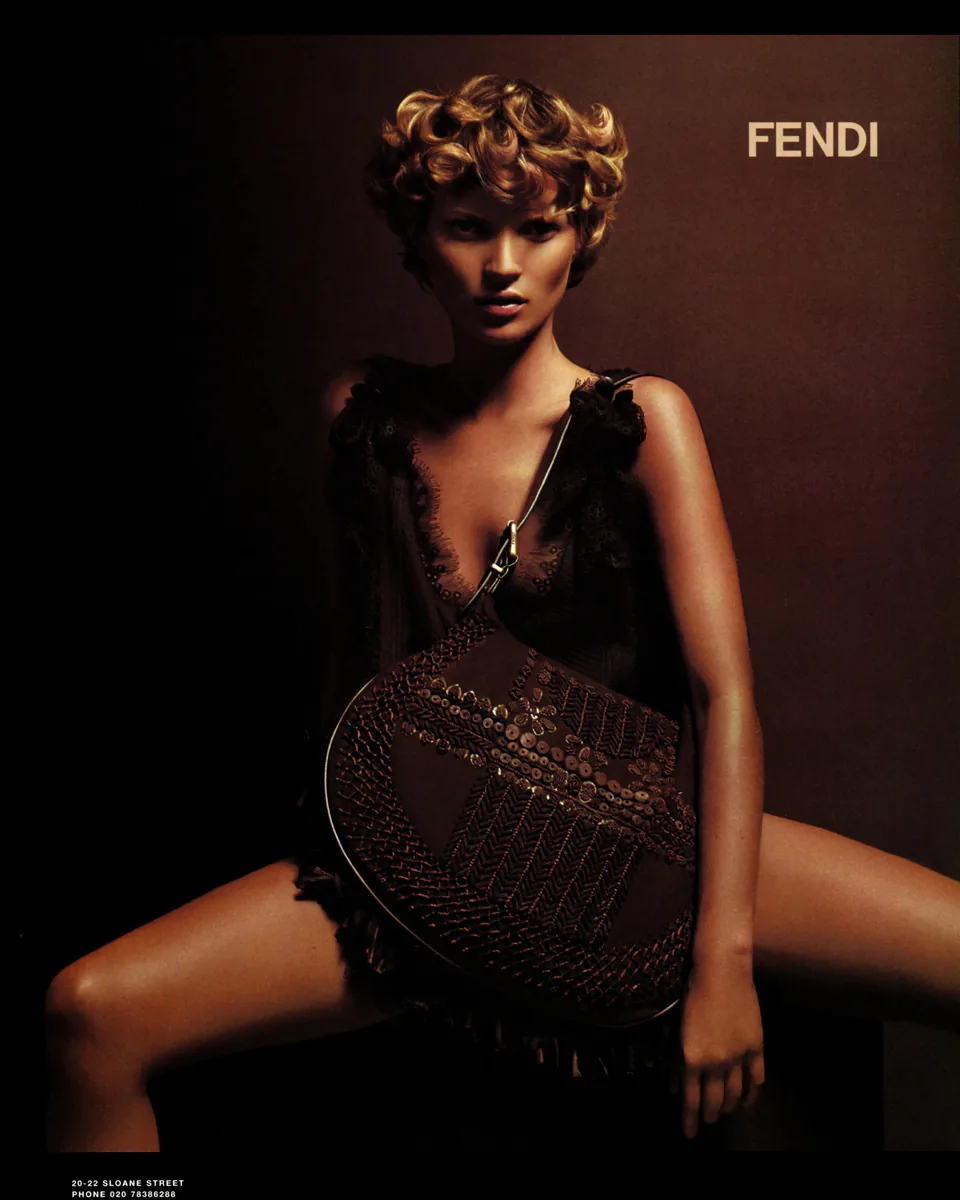
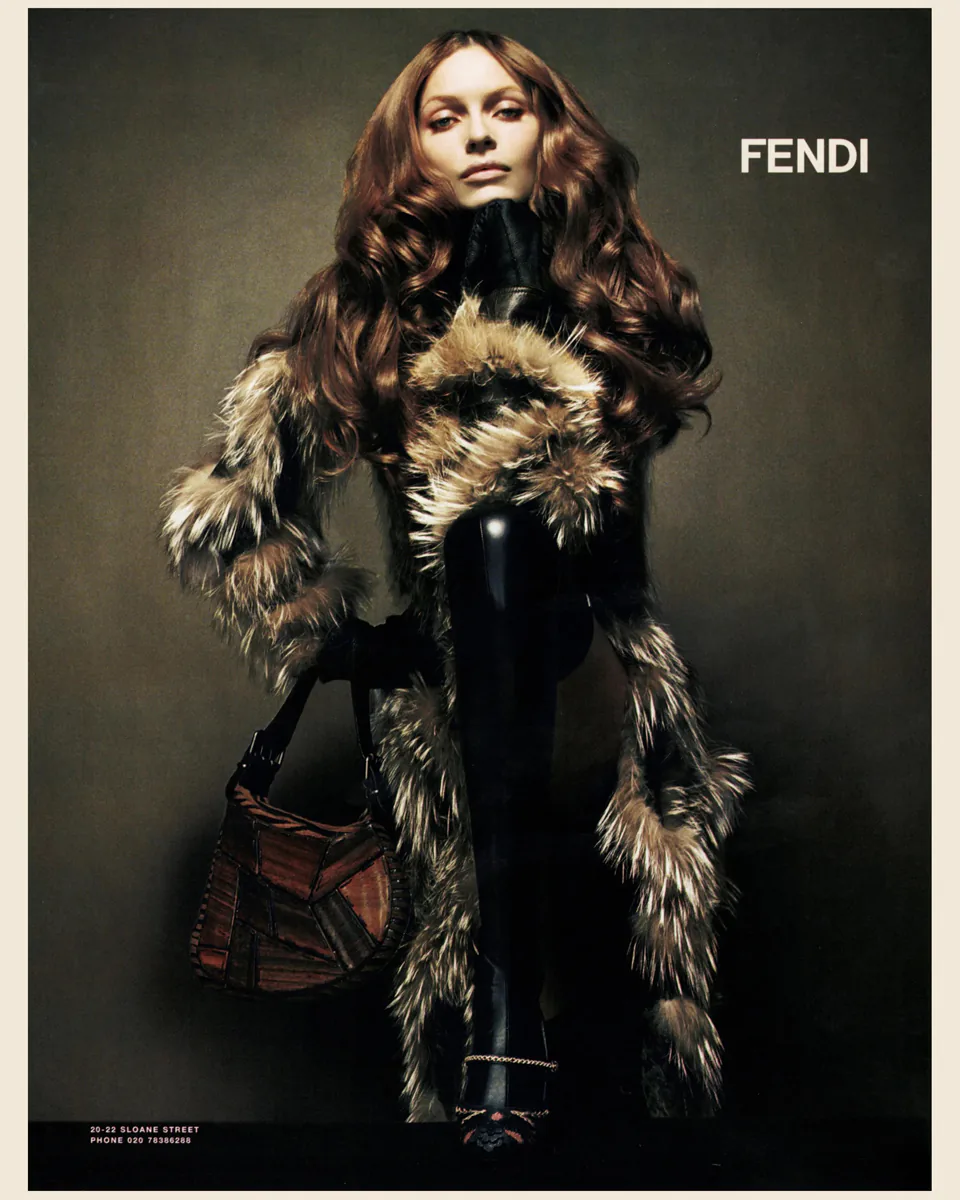
“The price of bags isn’t a problem because people consider them beautiful objects to keep,” Venturini Fendi alleged; her optimism, given that it was a product of the ill-fated Spring/Summer 2002 season, rather bold for the time.
But equally bold was the story of how the Oyster was conceived.
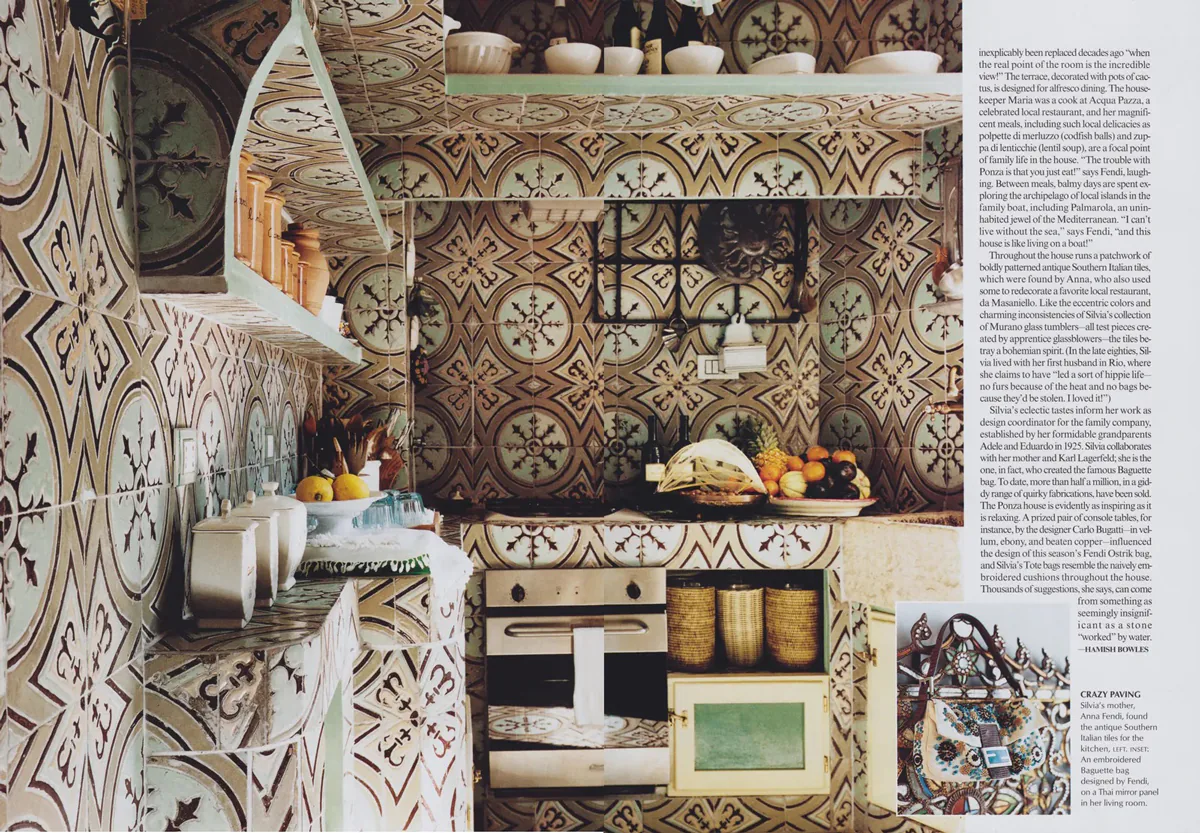
Inspired by a prized pair of Carlo Bugatti beaten copper console tables in Venturini Fendi’s Ponza villa, the Oyster’s design coincided with a period when Mr. Patrizio Bertelli – husband to one Mrs. Miuccia Prada and CEO to the Prada Group – held a 25.5% ownership stake at Fendi. So, “concerned that the bag’s design might find its way to Prada,” reported Cathy Horyn, “Ms. Venturini kept it from him until the day of the show.
‘We hid it in a box in the toilet,’ she said.”
It was fashion folklore at its finest. Yet, I couldn’t help but wonder, do all folklores warrant a retelling?
When in Rome
Today, Fendi is a fixture of Rome. It’s the first billboard you see after border control at Leonardo da Vinci airport. Its flagship store is just down the road from the Spanish Steps. And Venturini herself has personally ventured into a series of ambitious, multimillion-euro projects restoring the historic Roman landmarks, like Trevi Fountain and the Temple of Venus and Rome.
But Rome, a bustling metropolis where life unfolds in immediate proximity to the proud ruins of civilizations past, where ancient Egyptian obelisks and hulking high-rises inhabit the landscape in harmony alongside Renaissance art and Baroque architecture, is also where history, “laid out like a seductive platter, can be a trap,” Venturini warns. And history just isn’t something she’s interested in. “If it reminds me of something we’ve already done,” Venturini told Wallpaper Magazine, “then we can’t do it. We move on.”
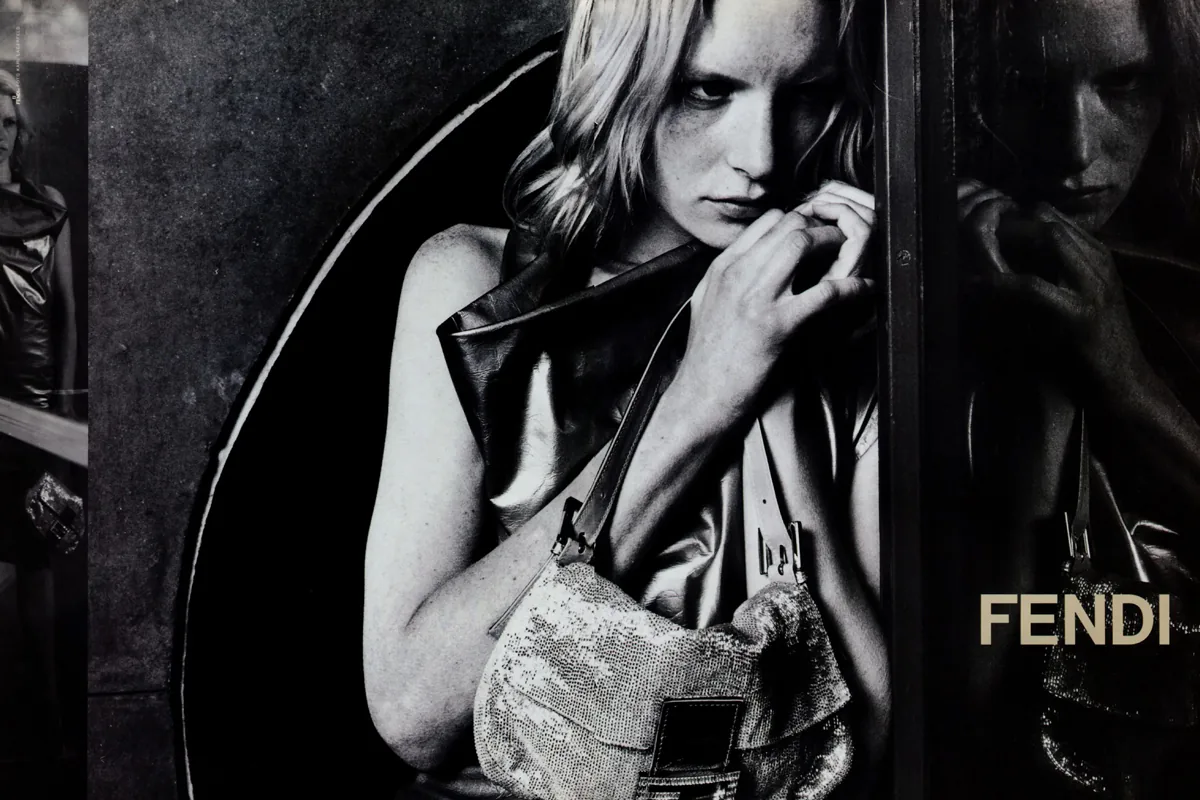
And the Oyster (also known as the Ostrik), coming in hot on the heels of Baguette-mania, Fendi’s purse de résistance, the one that was stolen from Carrie Bradshaw on national TV, the one that launched a thousand wishlists, firmly belongs in the pages of its house’s haute history.
That “Talitha-Getty-rich-hippie-meets-Roman-warrior-goddess with stitching, the beautiful handiwork, and the craft,” Kessler-Sanders reminisces, “was so strong. It was just very, very beautiful.” And like the Baguette before it, it was a blank canvas; Carrie’s was a splash of sequin, yours could be doused in diamanté, embellished with embroidery, or zucca-fied in monogram motif (fun fact: the FF stands not for “Fendi Fendi” but actually for “Fun Fur”!)
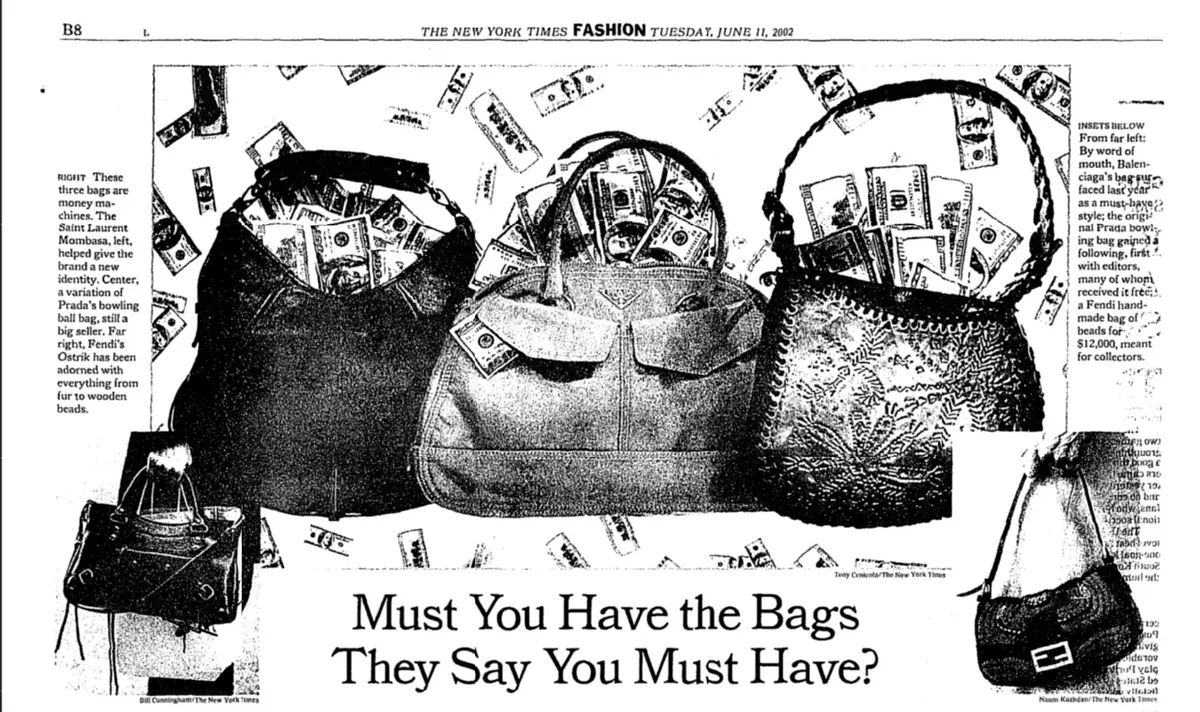
Get it in wood! Get it in brass! Horyn’s 2002 piece for the NYT, titled “Must You Have the Bags They Say You Must Have” shows the mollusk moniker overflowing with 100-dollar bills! One Oyster bag, now actually on display at The Met, features a Zucca canvas base sprouting plumes of silk and fur!
In a sense, the Oyster captured both ends of the 2002 spectrum: the absurd excesses of the Y2K and the unbridled optimism of better decades to come. It was for the oddballs, the misfits, the Andy Sachses who’d sling it to work, and a whole generation of the million girls (and boys) who’d kill for the job, notwithstanding the eye-rolls of the Emilies and siren-screams of the Serenas.
It was Fendi’s Dickensian ode to the best of times, and the worst of times.
Related Post
Coach Just Dropped the Most Insane Limited-Edition Tabby
Inspired by an archival Coach style from the 1970s, the Coach Tabby bag has quickly [...]
Is There Such a Thing as a “Tennis Bag” Anymore?
There are certain bags that announce where they are going before their owners do. A [...]
Celebrities Close Out July With Classic Chloé, New Bottega, and More
And just like that, July is coming to its inevitable close. While our comrades across [...]