How Does Goyard Get Away With Never Advertising Itself?
History
A chronological record of significant events (such as those affecting a nation or institution) often including an explanation of their causes
Heritage
Something transmitted by or acquired from a predecessor; legacy, inheritance
Put like way in the simplest of terms, Merriam-Webster’s dictionary does a decent job of defining the difference between history and heritage. The difficulties, dear reader, arise when the government gets involved.
And among the protest-stricken arrondissements of Paris, the latest bit of glamorous goss comes straight from the top: a fashion face-off for the ages, so fraught that France’s highest court had to ask Luxembourg for help..
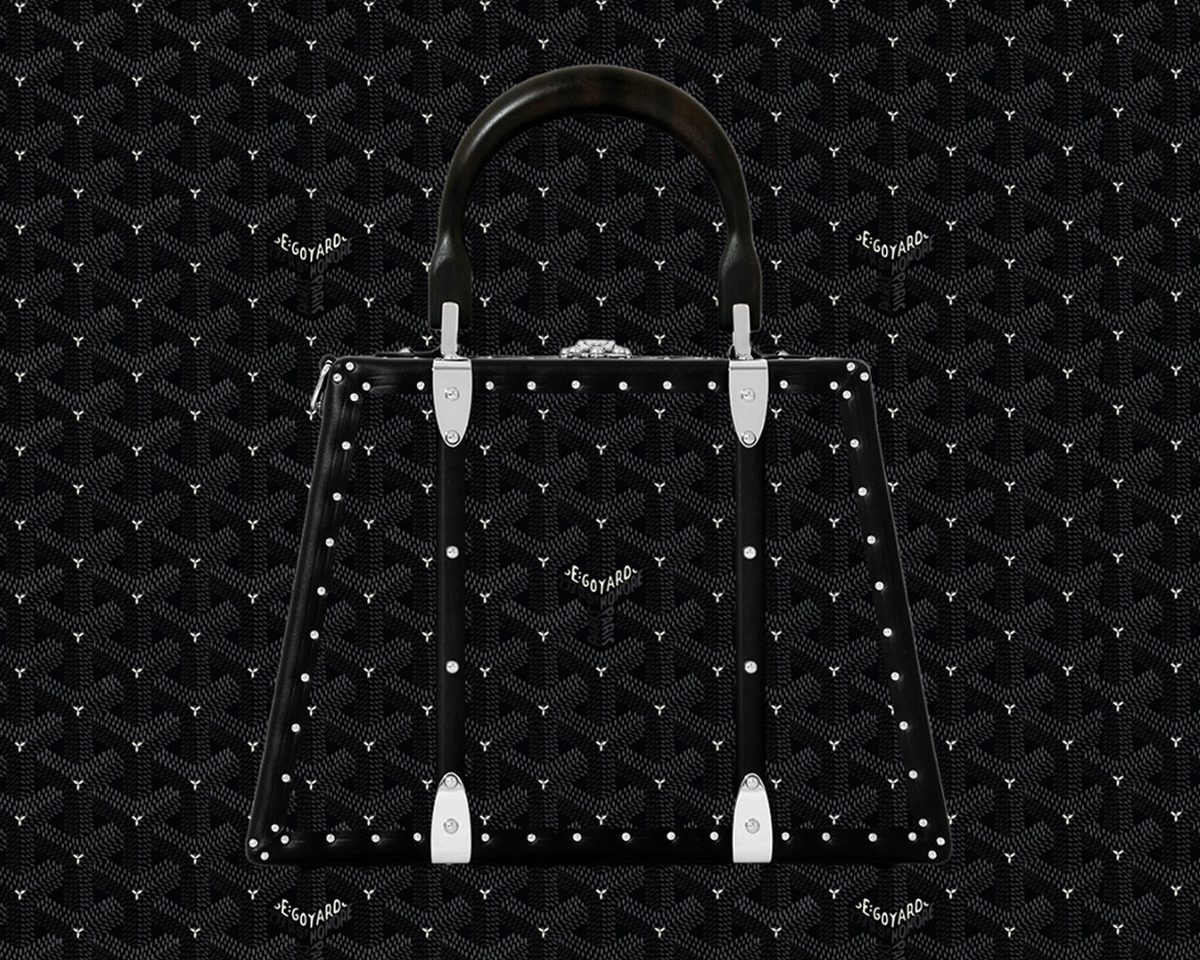
And at the forefront of this feud is the infamously enigmatic Maison Goyard.
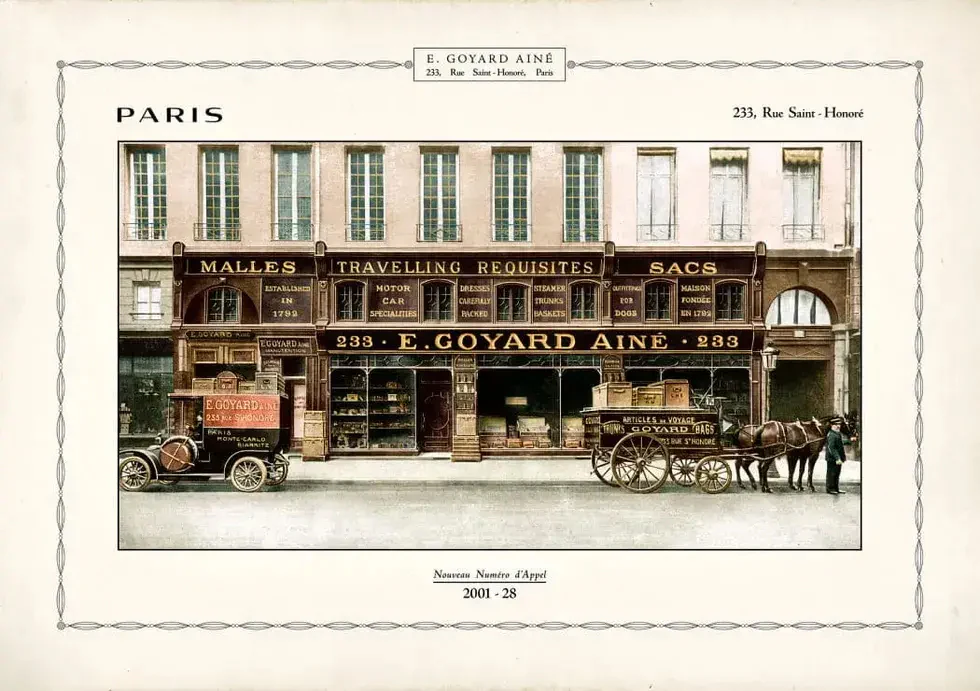
Honor at Stake on Rue Saint-Honoré
Maison Goyard began in 1792 as Maison Martin (after founding father Pierre-François Martin), first started off as a workshop for wooden cases, crates and trunks to transport fragile objects for the French aristocracy.
By 1841, however, with no official heir to the house, Martin passed the helm to his adoptive daughter and son-in-law, Louis-Henri Morel. It was under Maison Morel in 1845 that 17-year-old François Goyard joined as an apprentice. Seven years later, when Monsieur Morel himself suddenly passed away, his protégé promptly took over.
And Maison Goyard was officially born.

Less than 600 meters away on Rue de Richelieu, Louis Moutier, fifth-generation master of Le Page-Moutier, had already been peddling weaponry for over a century (since 1717, to be exact). In 1865, Moutier teamed up with his nephew, Émile Henry Fauré Le Page, and thus was born the house of Fauré Le Page, France’s premier purveyor of fine firearms and heavy hunting gear for nearly three hundred years, until its dissolution in 1992.
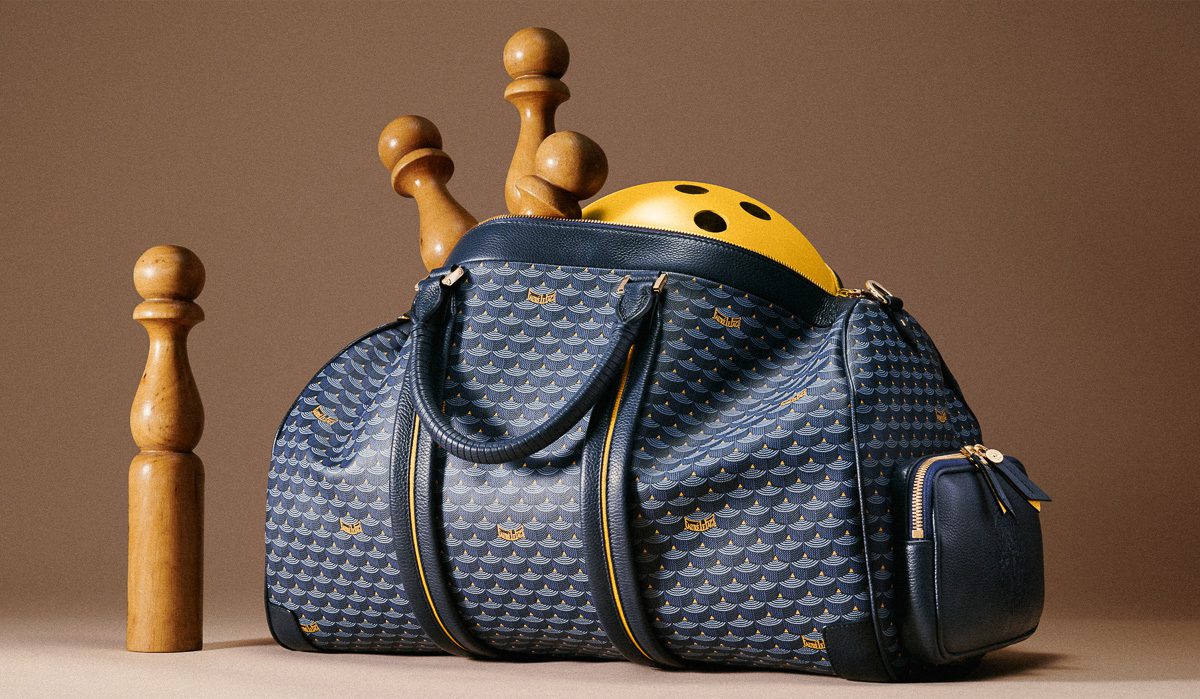
But the two worlds collided in 2009, when the weaponeer’s dormant trademark name was incorporated as Fauré Le Page Paris SAS, with an entirely new direction: a luxury leather goods label.
All bearing the insignia Fauré Le Page Paris 1717.
And Goyard, touting itself as France’s oldest leathercrafters by virtue of its 1792 origins (Hermès came in 1837, Louis Vuitton in 1854), was having none of it.
In the lawsuit that followed, the question facing the French courts was this: does borrowed history bear the hallmark of a heritage brand? Does three centuries of history entitle one to three centuries of heritage?
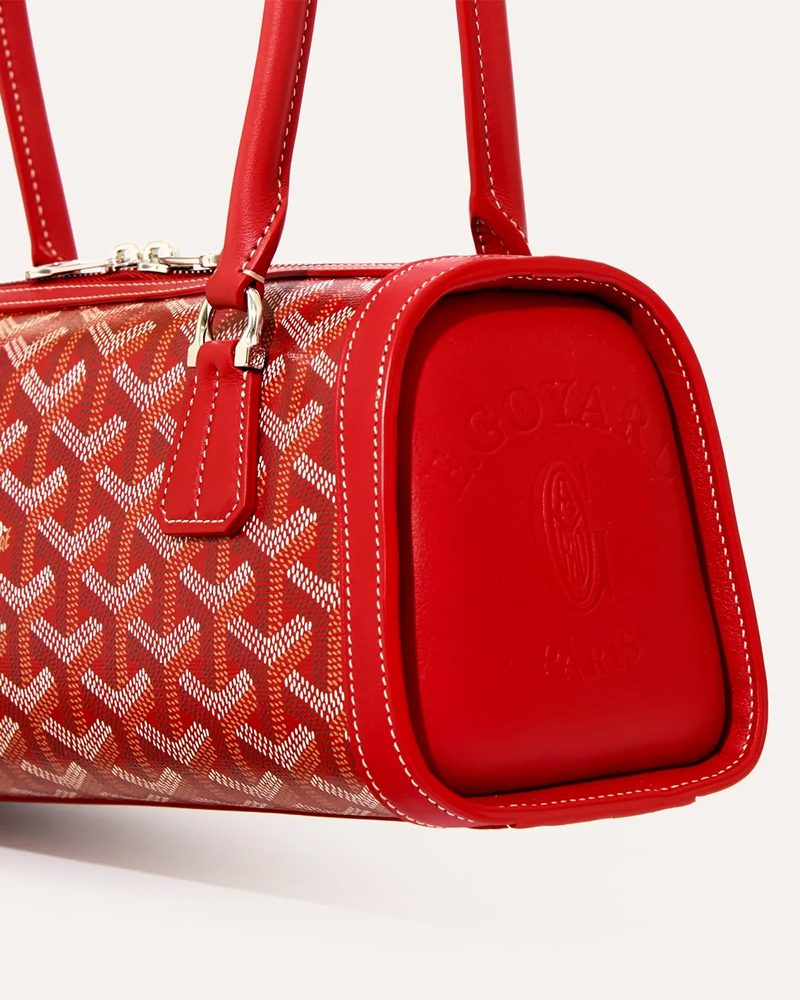
Shoppers perusing Le Page’s patterned coated canvas totes, not entirely dissimilar to Goyard’s own patterned Goyardine coated canvas totes, in Le Page’s new Rue Saint-Honoré flagship, practically next door to Goyard’s own Saint-Honoré flagship, certainly wouldn’t know any better.
Ultimately, on September 23, the French Supreme Court, following the Court of Justice of the European Union’s (CJEU) ruling in Luxembourg, held that Fauré Le Page, in advertising itself as a centuries-old luxury house since 1717 — thus older than Goyard by 75 years (136, going by its official founding year of 1853) — “suggests longstanding know-how — and resulting quality and prestige — that the business does not actually possess.”
A big win for Goyard. Not to mention, fourteen years of free press.
The Princess and the Flea
When I found my first Goyard piece,” Jean-Michel Signoles told the New York Times in 2009 while appraising a stack of vintage suitcases at the flea market of Port-de-Lanne, “I was unaware of the company’s existence.
It was exactly thus that Monsieur Signoles had encountered his first Goyard trunk. “I coveted this company for 20 years,” he reminisced, “I bought all of its records, traced back its registered models, and got to know the dealers who sold Goyard items. I knew this company well.” Eventually, his passion for collecting its creations led him to outright buy out the brand in its entirety.
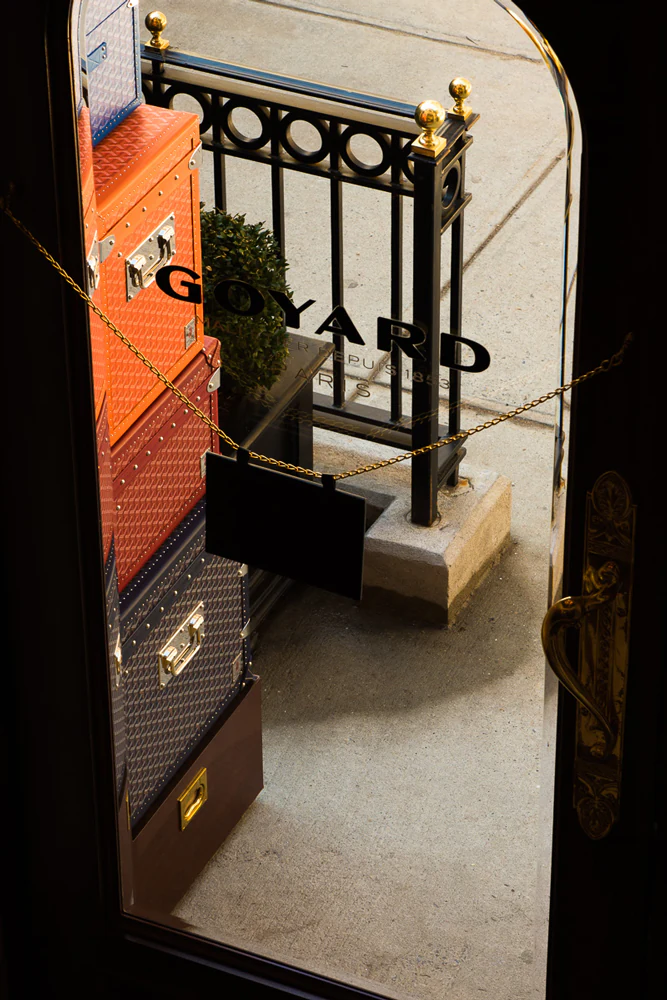
Meanwhile, Goyard itself had all but perished, with the aftermath of WWII leaving the canvas scarce for decades, and shifting tastes following postwar frugalities. Robert Goyard, upon inheriting the brand in 1937, had left the label mostly unchanged, its last outpost a lone boutique on Rue Saint-Honoré.

“When I bought the company in 1998, it was barely making €500,000 a year, with one salesman in the store,” he said, “Goyard was a sleeping beauty.”
Immediately, he got to its reawakening, reviving archival designs with the fervent reverence of a museum curator, expanding the signature Goyardine canvas in custom colors like canary yellow, forest green, sky blue, and burgundy, and reinstating its longstanding art of personalization.
Storefronts opened across international markets, as did new ateliers in New York, Beverly Hills, Mexico, Tokyo, Hong Kong, Brazil and Carcassonne, France.
Big changes were afoot, but what’s more remarkable is how little actually changed: there were no fashion shows, no seasonal collections, no Instagram influencer by way of a Link in Bio, and barely a website (“Goyard does not engage in any form of ecommerce,” it scoffed, though that may be changing).
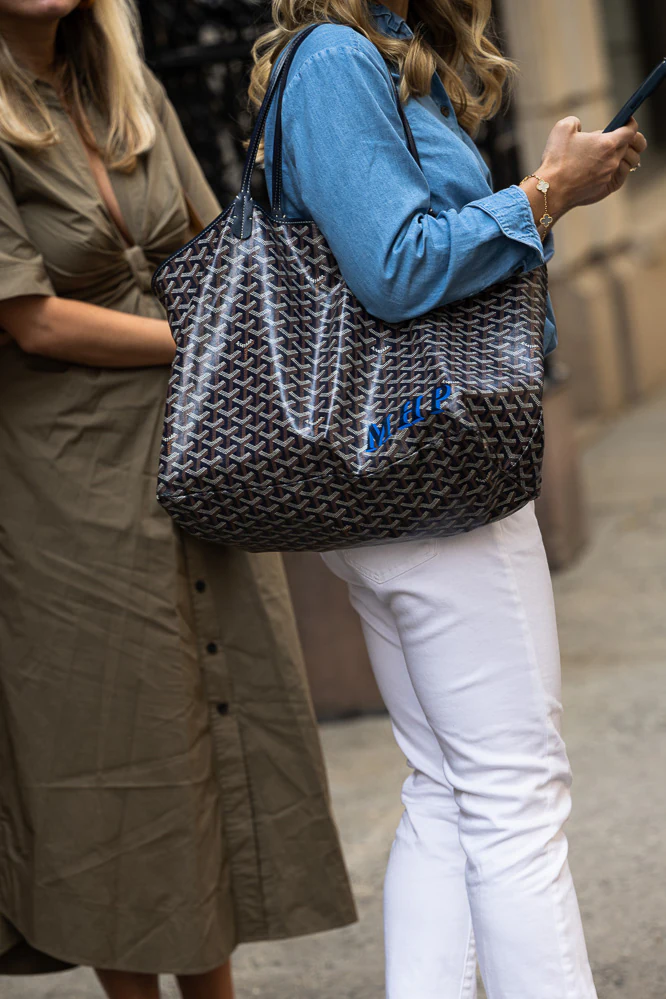
So, whether it’s the $1,800 bottom-rung Saint Louis tote you want, or a fully customizable backgammon set you crave (“A bargain at $21,290,” quips Molly Young), in-store is the way to go (and the standing in line that entails).
Better Have the Money
Now, while Goyard’s more litigious luxury peers (*coughs* Louis Vuitton) continue to fight the increasingly uphill battle against bootlegs, Signoles, in keeping with his aversion to the spotlight, has shied away from filing counterfeit claims, the Le Page lawsuit a rare exception. And the fourteen years of free press? Nothing short of his worst nightmare.
Yet, this restraint hasn’t exactly been a roaring success.
“Nothing says, ‘I’m above all this’ like a plastic non-biodegradable canvas tote emblazoned with 1,000 miniature logos,” declares content creator Angus de Kirkby on Instagram. Incidentally, in his list of basic bags, Goyard comes a close second, right after Vuitton.
“You’re a pick-me who thought they were too iconic for the Neverfull, but never failed to consider that the bag that you’ve chosen comes in colour choices that look like they were chosen by a five-year-old with a Crayola set,” he scathingly remarks. “Get it together, diva.”
And getting it together, it seems, has been rather grim for Goyard.
Because, on the one hand, Goyard’s strictly gatekept strategy has led to burgeoning resale demand. In 2024, it was listed among Rebag’s top 10 bestselling brands, achieving “unicorn” status with an average value retention of 104% — a distinction shared only by Hermès, Chanel and Vuitton.


On the other hand, Goyard, according to Entrupy’s 2025 State of Fake report, topped the list for “unidentified” product submissions, with 18.4% of St. Louis totes failing authentication. So not only are its counterfeits flooding the market, but they’re also so convincing that even AI-powered systems cannot definitively authenticate them. “Relative to [the company’s] size,” wrote Flavio Cereda, Investment Director for Luxury Brands Strategy at GAM Investments, “Goyard is the No. 1 most copied brand.”
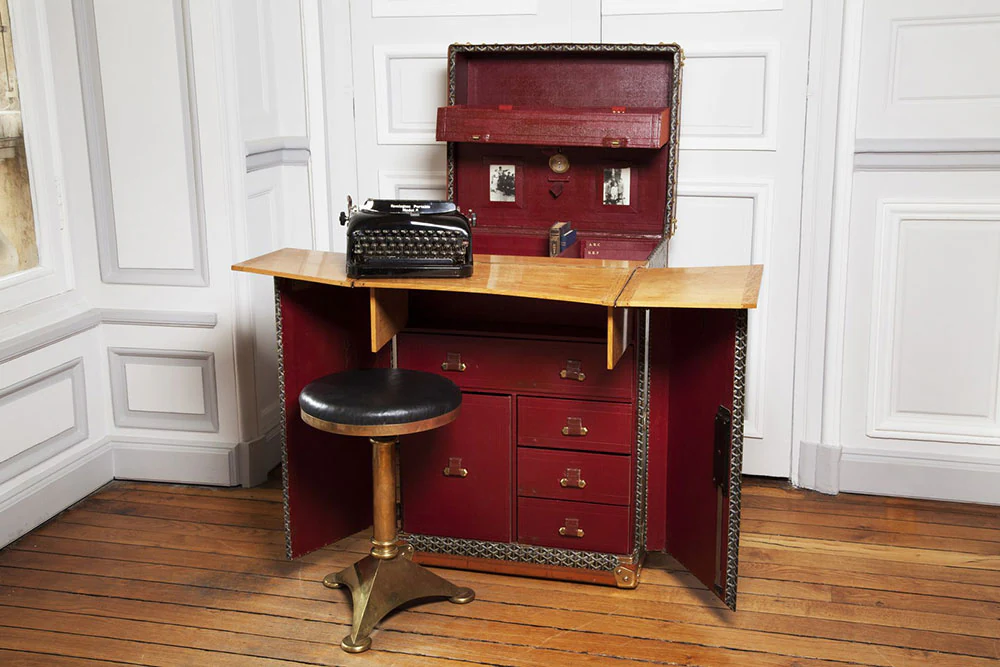
Not to mention that Goyard’s clientele once included the likes of Sir Arthur Conan Doyle (whose custom Goyard writing trunk came complete with a typewriter and foldout desk), Josephine Baker (whose custom carrier was made for her cheetah), and the 2nd Duke of Westminster, Hugh Grosvenor (who commissioned a clandestine commande spéciale trunk for his lover, Coco Chanel — who famously refused his proposal: “Everyone marries the Duke of Westminster,” she declared. “There are a lot of duchesses, but only one Coco Chanel”). Today, the Goyard gang has, erm, evolved.
Kim Kardashian, for one, loves her Saint Louis and Saigon. Kim Kardashian’s sister Khloe flew to Tokyo with not one but two customised Goyards in tow. Kim Kardashian’s ex-husband was spotted at PFW with a monogrammed Goyard briefcase, while Kim Kardashian’s daughter was spotted with a personalised Saint Louis tote at the age of four. And Kim Kardashian’s mother was gifted a $15,000 Goyard trunk brazenly emblazoned with the words “Rich As F***”.
Among other problematic divas who are also proud Goyard owners? Gwyneth Paltrow, Paris Hilton, Lindsay Lohan, and Catherine Deneuve.
But perhaps it’s Rihanna, who sticks a kidnap victim into a Goyard steamer trunk (not a paid endorsement) in her 2015 music video for B*** Better Have My Money, who best sums up Goyard’s entire advertising strategy.
Or, really, its lack thereof. It is, after all, the money that has always talked.
Related Post

Mulberry Makes Its Long-Awaited Runway Return at LFW With Christopher Kane
In the last couple of years, Mulberry has quietly been hinting at its triumphant comeback, [...]

Celebrity Bag Lovers Celebrated Spain’s FIFA World Cup Win With Bags From Chanel, Gucci, and More
The final game of the 2026 FIFA World Cup took place over the weekend at [...]

Balenciaga’s New Bowler Blends Classic Elegance With Cool-Girl Ease
Pierpaolo Piccioli is quickly carving out a new era for Balenciaga, one that honors the [...]